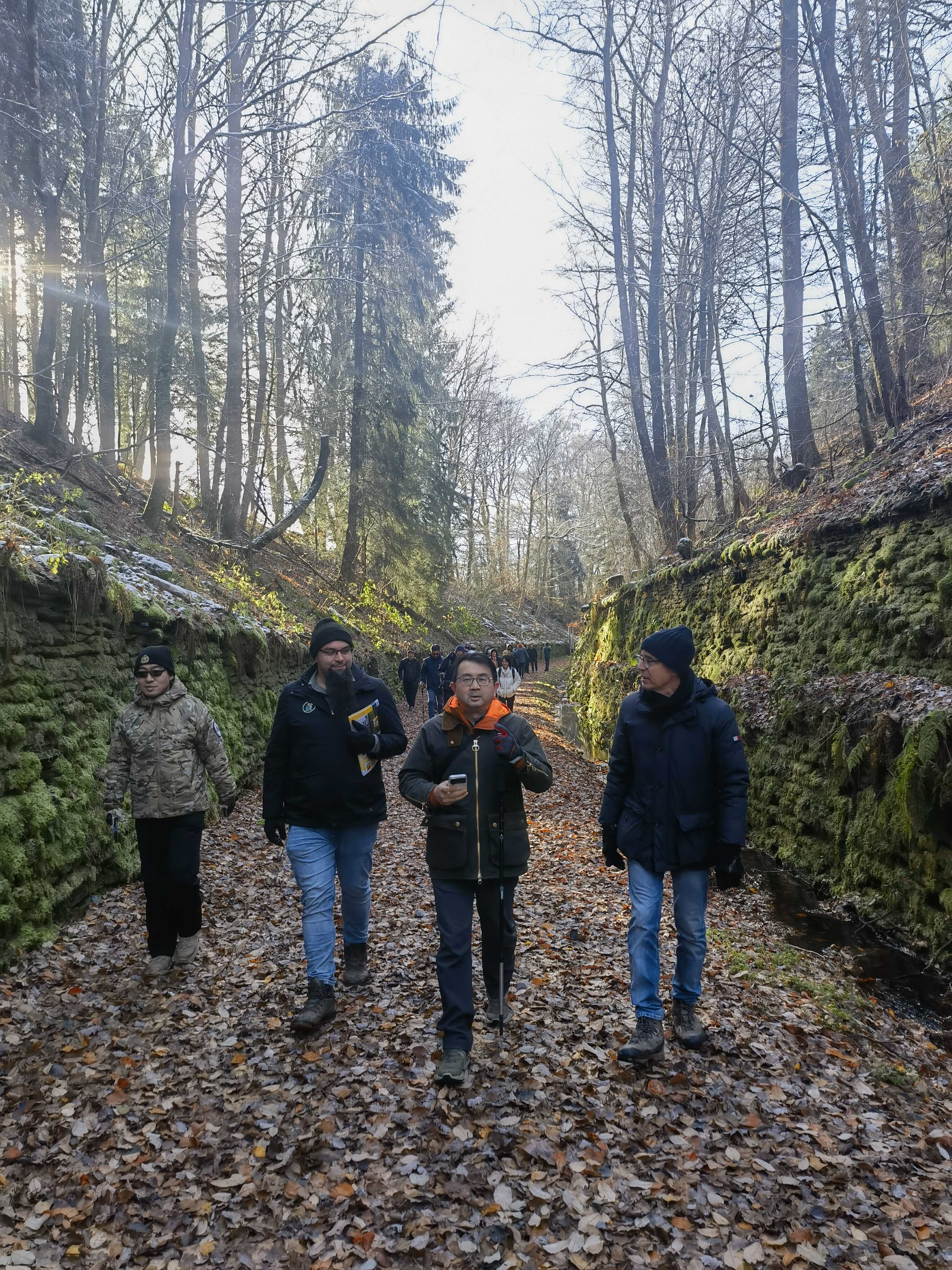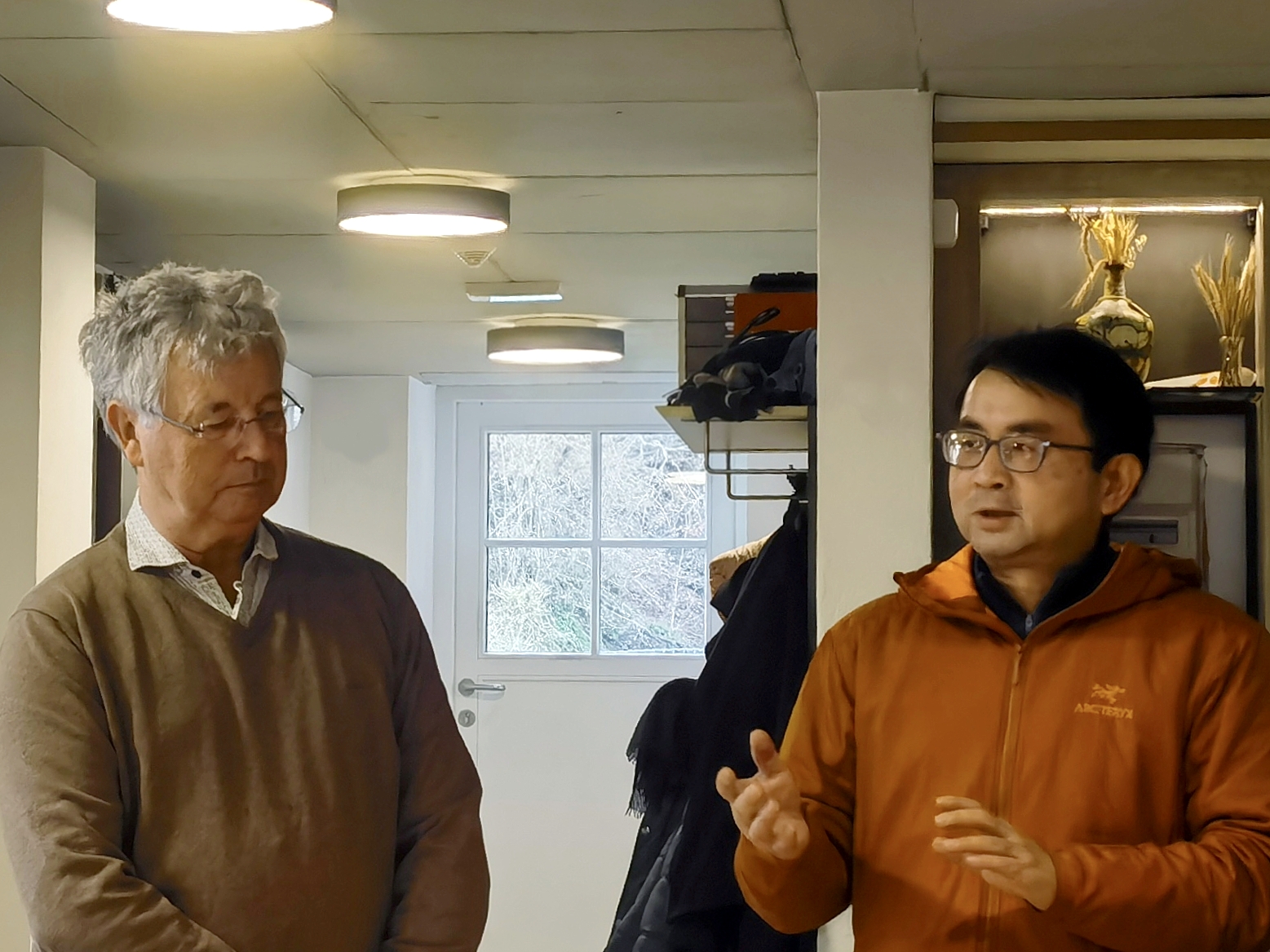
It is a great pleasure to come to the beautiful banks of the Our River and visit Luxembourg’s National Nature Park. Although the winter is harsh and the cold severe, the magnificent and splendid natural scenery here is refreshing and uplifting. The park’s experience and practices in protecting the grassland ecosystem are deeply inspiring, and the warm hospitality of our Luxembourgish friends has made me and my colleagues feel particularly welcomed and at home.
Though Luxembourg is not large in size, it boasts remarkable landscapes, like winding rivers, ancient rolling hills and grasslands, lush and verdant forests, with castles, pastures, and parks scattered throughout. Towns and nature blend organically, and urban and rural areas develop in balance. The entire country is tranquil, stable, open and inclusive. While it is home to modern financial, technological and industrial centers, it also presents idyllic and poetic scenes everywhere.
The relationship between humanity and nature is the most fundamental relationship in human society. How to achieve harmonious coexistence between humanity and nature is a basic question in the development of human civilization. Strolling through the meadows and forests, wandering across the vast wilderness, and listening to the detailed introduction by our friends from the park management committee, I have also been reflecting deeply on how we can strengthen exchanges and mutual learning, deepen cooperation in ecological and environmental protection, particularly in the field of nature park development, and better enhance the well-being of the people both in China, Luxembourg and Europe, while making greater contributions to global sustainable development.
The Our Nature Park adopts a “contract-based management” model, which organically integrates ecological protection, environmental restoration, sustainable agriculture, rural development and community cultural revitalization, allowing local residents to become direct participants and beneficiaries of ecological conservation. Luxembourg’s concept of a “nature park” is based on public consensus, emphasizes endogenous motivation and balances protection with development. It shares the same goals, principles and approaches as China’s ongoing efforts to build a system of protected natural areas, with national parks as the main component, nature reserves as the foundation, and various nature parks as supplements. This offers us valuable references and inspirations.
Faced with the global ecological challenges brought about by the rapid development of industrial civilization, President Xi Jinping, always keeping the people at heart and grounding efforts in national conditions, has adopted a global perspective and creatively put forward Xi Jinping Thought on Ecological Civilization. Its core essence lies in adhering to the fundamental strategy of “harmonious coexistence between humanity and nature” and implementing the scientific concept that “lucid waters and lush mountains are invaluable assets” with the strictest institutions and most rigorous rule of law. This is not only a crucial theoretical tool for China to achieve its own coordinated development but also a significant intellectual contribution by China to global sustainable development, highly aligned with the spirit advocated by the United Nations 2030 Agenda for Sustainable Development.
In recent years, China has achieved remarkable accomplishments in ecological and environmental protection by advancing technological innovation and leading the energy transition. In the field of energy production, renewable energy sources such as wind and solar power have developed rapidly. In the first half of 2025, newly installed renewable capacity accounted for 91.5% of all newly installed capacity, and the share of non-fossil energy in total installed capacity historically exceeded 60%. In 2024, the installed capacity of new energy power generation surpassed that of coal power for the first time, becoming the core force in power supply. The proportion of clean energy in total energy consumption has risen to 28.6%, meaning that one out of every three kilowatt-hours of electricity consumed comes from clean sources such as wind and solar.
In the transportation sector, the shift toward green mobility has gained strong momentum. In 2025, the market penetration rate of new energy vehicles (NEVs) in China approached 60%, meaning that approximately 6 out of every 10 new cars sold were NEVs. Even more noteworthy is that China’s NEV production accounts for about 68% of the global total, providing core impetus for the green transformation of the global automotive industry.
Not long ago, the successful convening of the Fourth Plenary Session of the 20th Central Committee of the Communist Party of China marked another overall mobilization and deployment for China’s continued advancement of modernization. The session studied and outlined the economic and social development tasks for the 15th Five-Year Plan period, setting the achievement of new major progress in building a Beautiful China as a primary objective. It identified accelerating the comprehensive green transformation of economic and social development and building a Beautiful China as a major strategic task, proposing a series of significant measures, including continuously deepening the optimization of ecosystems, accelerating the development of a new energy system, and fostering green production and lifestyles. This fully demonstrates the high priority the Chinese Party and government place on ecological civilization construction and reflects China's unwavering commitment to the path of ecological priority and green development.
The Earth is the common home upon which all humanity depends. The construction of an ecological civilization concerns the future of humanity and requires all countries to work together in solidarity. China, Luxembourg and Europe all attach great importance to global issues such as climate change and ecological protection. Luxembourg's experience in the refined management of nature parks, coordinated urban-rural regional development, and sustainable communities is truly admirable. Meanwhile, China has undertaken extensive practices in the large-scale development of renewable energy, the full industrial chain of new energy vehicles, and the expansion of technological innovation application scenarios.
Looking ahead, China will continue to be an important participant, contributor and leader in global ecological civilization development. China and Luxembourg, as well as Europe, should synergize efforts in three key areas:
First, we should strengthen policy and governance dialogue. It is necessary for us to engage in in-depth exchanges on topics such as the management of national parks and nature parks, biodiversity conservation strategies, green financial innovation and circular economy legislation. By fostering closer friendly interactions, we can promote cooperation between local governments and nature reserves.
Second, we should enhance alignment of green technologies and industries. It is important to leverage Luxembourg’s strengths in green technology and sustainable finance, while combining them with China’s leading technologies in new energy, electric vehicles and energy-saving environmental protection industries, as well as its vast market scale and consumption potential. Together, we can expand and deepen win-win cooperation.
Third, we should strengthen collaboration in global environmental governance. On global issues such as climate change response and biodiversity conservation, we should maintain close communication and coordination, working together to promote the establishment of a fair, equitable and mutually beneficial global environmental governance system.
We are confident that, through the joint efforts of China and Luxembourg, as well as China and Europe, we can build bridges with green development and sail forward on the vessel of cooperation. By pooling our ecological wisdom, environmental commitment and practical actions, we will generate powerful momentum to create a better life for our peoples and make new, greater contributions to building a clean and beautiful world, advancing the vision of a community with a shared future for mankind, and fostering a shared community for all life on Earth.